
Master ANY Skill: The Journey from Conscious Effort to Unconscious Excellence
- Kane Abbott
- Jan 25, 2025
- 4 min read

Updated: Feb 2, 2025

➡️ Ever heard the rule that it takes over 10,000 hours of practice to master a skill? Robert Greene suggests that all humans possess a 'hidden potential', which is an innate ability to achieve mastery, that can be unlocked with the right approach.
What is mastery?
"Mastery is not a function of genius of talent, it is a function of time and intense focus applied to a particular field of knowledge"
It's not about shortcuts and hacks, it is about becoming a true master in your field, and this requires you to have:
Have a deep passion for what you do
Engage in continuous learning and growth opportunities
Have resilience in the face of challenges
The discipline to practice your craft consistently
Patience and sustained focus
"Identify your life's task"

In order to identify your life's task, you need to reconnect with your past self and reflect on your natural inclinations.
What are you curious about?
What did you love learning about as a kid?
Find what stimulates your natural curiosity now
What skills and strengths do you have?
How can you blend your skills?
Pro tip: Finding your life's task isn’t just a one and done deal, stay open as your life task can only be revealed to you through the process of discovery
Apprenticeship Phase
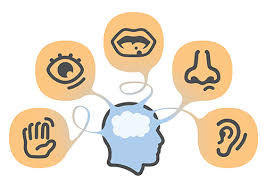
Once you’ve identified your life task, adopt an apprentice mindset. This isn’t about taking an underpaid entry-level job, but immersing yourself in your field—learning, observing, and mastering the essential skills needed to respond with confidence and precision.
Observation & Learning: Watch and learn from experts, focusing on their habits, techniques, and the reasoning behind their actions.
Skill Acquisition: Develop foundational skills through consistent practice and refine them with feedback.
Embracing Humility: Stay open to criticism, approach tasks with a learning mindset, and set ego aside for growth
Mentorship (optional): While not essential, Greene suggests it is optimal for achieving mastery. A mentor provides guidance, feedback, and insight, helping you avoid mistakes and accelerating your learning by sharing their expertise and knowledge.
Once you've established a solid foundation during the apprenticeship phase, it’s time to apply those skills in these...

Creative Active
Phase
➡️➡️➡️➡️➡️➡️➡️➡️
Mastering a single skill isn’t enough; true mastery lies in expanding your abilities and blending them in unique, innovative ways that set you apart in a fast-evolving world.
"A jack of all trades is a master of none, but oftentimes is better than a master of one."
In the creative-active phase, your goal is to experiment, think big, and push beyond your comfort zone and the established norms of your field. In this phase, you're not just accumulating knowledge; you're synthesizing it into something more reasonable.
Robert Greene's also suggests to focus on these during this phase:
Social Intelligence: Building strong relationships and understand social dynamics.
Resilience & Adaptability: Embracing challenges and staying flexible under pressure.
Self-Direction: Take charge of your learning and self-guide your skill development.
As you progress, mastery shifts from simply improving to reinventing how you apply the rules, unlearning outdated assumptions, and leaving your unique mark in ways others could not anticipate
Once you've mastered the fundamentals, you can push boundaries to solve problems and bring your unique perspective to discover new insights.
How to know when you have reached mastery?

With steady practice and a clear sense of purpose, you'll develop true mastery. True mastery goes beyond knowledge—it’s about transforming what you know into an intuitive, almost automatic ability.
When you reach this point, it feels like second nature; you’re no longer consciously thinking through every step—you enter a state of flow because you just know what to do.
What are the psychological components of mastery?

Mastery isn't just about acquiring knowledge and experience, you need to cultivate the mindset of a master and use the masters tool kit to drive continuous improvement.
Growth Mindset: Developing new abilities over time through consistent effort.
Intrinsic Motivation: Internal drive to improve, focused on personal growth rather than external rewards.
Focus and Discipline: Concentration and resilience in practice.
Self Reflection and Awareness: Assessing strengths and weaknesses and adapting for growth.
Find Comfort within Discomfort: Embracing challenges and uncertainty, knowing that growth often comes from discomfort.
Tolerance for Repetition: Embracing repetitive tasks to build muscle memory
Ability to Accept and Apply Feedback: Viewing criticism as a valuable tool to refine and develop your work.
Practice Humility and Lifelong Learning: Recognizing that there’s always more to learn, staying humble, and actively seeking opportunities to grow and develop throughout your life.
Integrating these psychological components will help you build expertise and develop the resilience needed for sustained success. Mastery is an ongoing process, and with these foundations, you’re set to keep growing.
Real World Example

Example: Mark Zuckerberg, with self-taught programming skills, created Facemash, a precursor to Facebook, aiming to connect people. Prior to that, he tried developing an app like WhatsApp, highlighting his early vision to connect people digitally.

Facebook remains grounded in mastery principles, continually evolving and refining its platform to remain dominant.
Want to learn more about Mindset?

If you're ready to dive deeper into transforming your mindset and achieving your goals, join us for Mindset Matters by Nathan John:
📅 Date: Saturday, 1st February
⏰ Time: 3 PM (GMT)
💻 Platform: Zoom
🎤 Guest Speaker: Nathan John
🎥 Host: Rayaan Farah
Sign up link

Comments